Alternate Options Follow

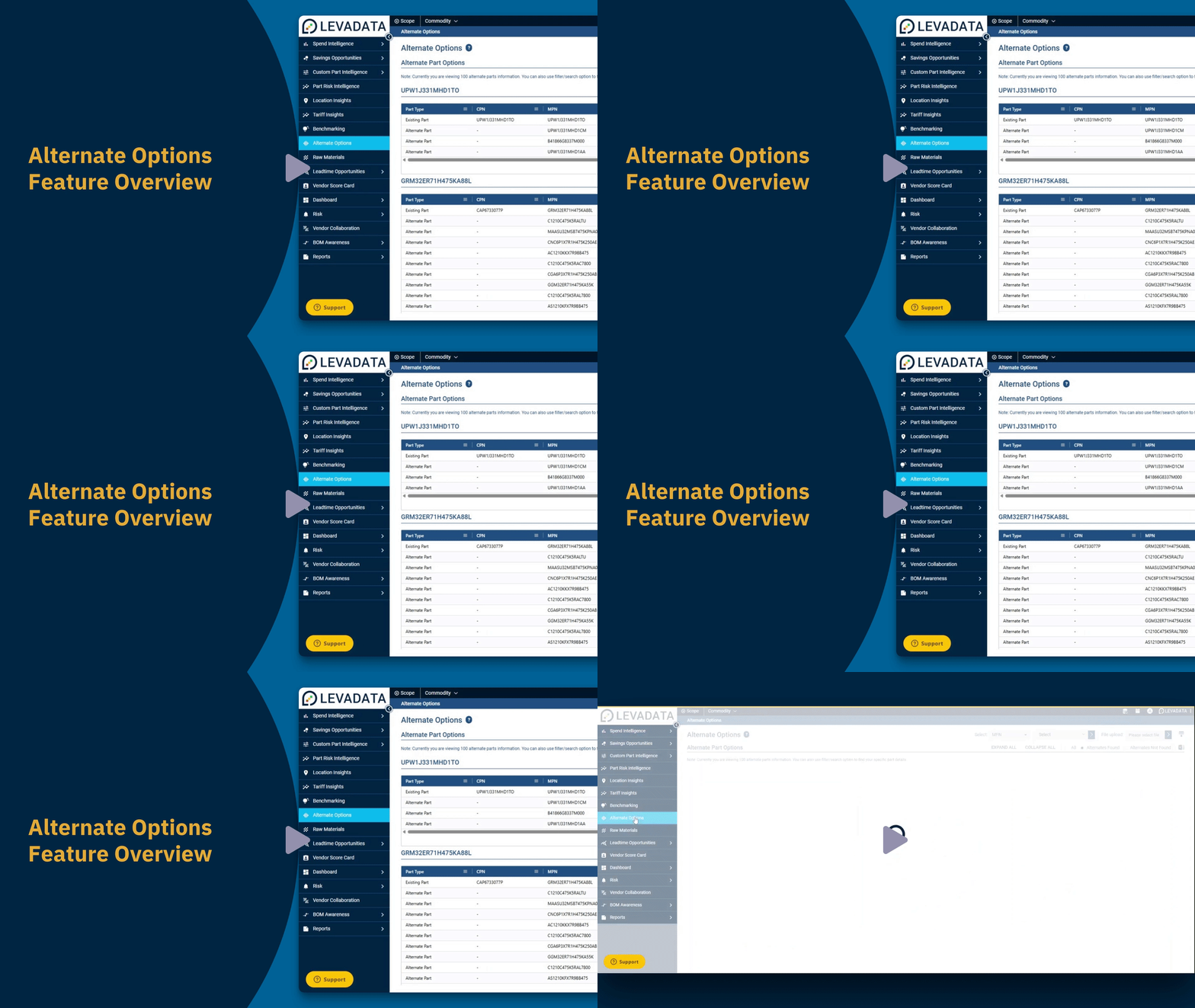
Manufacturer Part Numbers (MPNs) can be matched as an alternate part if they have the same Form, Fit, and Function (FFF) as what you are currently buying. LevaData Platform presents these alternate part options to our users in order to evaluate for potential cost savings. If the MPN is commercial / off-the-shelf, we will match it to our IHS database and it will return the FFF equivalents as well as if there are benchmarks in the LevaData community data pool, with the same rules as covered in Benchmarking.
Click here to learn more about how Accuris (IHS) determines FFFs.
Alternate Options
When you select Alternate Options you will be immediately presented with the highest potential cost savings opportunities for alternate part substitutions:
You can review any of these top opportunities to see more specific details about the alternate part matching option presented.
Reviewing Alternate Options in the Table
- The table for each alternate option contains part information, manufacturer, description, cost against a variety of benchmarks and other key details.
-
DS (Data Sheet): Clicking on DS opens Data Sheet of MPN in a new window
- The PDF Version of the Data Sheet is from a third-party source.
- The DS link will be in disabled if the part doesn't have a Data Sheet.
Benchmarks
It is possible to lookup the Benchmark Target Cost in the same area of Alternate Options. LevaData Benchmark is a discount analysis using MPN + FFF same spec matches and then applying the Average Percent Discount to Lowest Distributor price of each MPN. Once you have selected a part, then examine the LevaData Benchmark:
Note: If the eBenchmark Target Cost is not available for the selected MPN then "Cost Not Available" will display.
Learn More About Alternate Part Matching
Best Practices for Using Alternate Parts
While the LevaData Platform identifies potential alternate parts based on form‑fit‑function (FFF) equivalence, it’s essential to verify that a substitute will truly work in your application. Here are some guidelines:
- Review datasheets thoroughly: Ensure the alternate part matches the original part’s package dimensions, pin configuration, electrical ratings, and operating temperature range. Even slight differences in pin assients or footprint can cause fit or functional-
- Check mechanical fit: Confirm that the new component fits within the same physical space on your board or enclosure, and that mating connectors or sockets are compatible.
- Validate functional performance: For active components, confirm that the substitute provides the same functionality (e.g., bandwidth, power handling, tolerance) and doesn’t introduce unexpected behaviors.
- Assess regulatory and safety requirements: Some industries (e.g., aerospace, medical, defense) require parts to be qualified or certified; switching to an alternate may need requalification or customer approval (
- Prototype and test: Whenever possible, build prototypes and test the alternate component under real operating conditions to ensure it meets performance and reliability expectations before fully releasing it into production.
By following these best practices, you can confidently leverage alternate parts to mitigate supply disruptions and capture cost savings while maintaining product integrity. Consult the linked articles above for details on how the LevaData platform identifies alternatives and presents benchmarked cost comparisons.
Comments
0 comments
Please sign in to leave a comment.